
What Makes a Safe Community?
Aug 03 2026
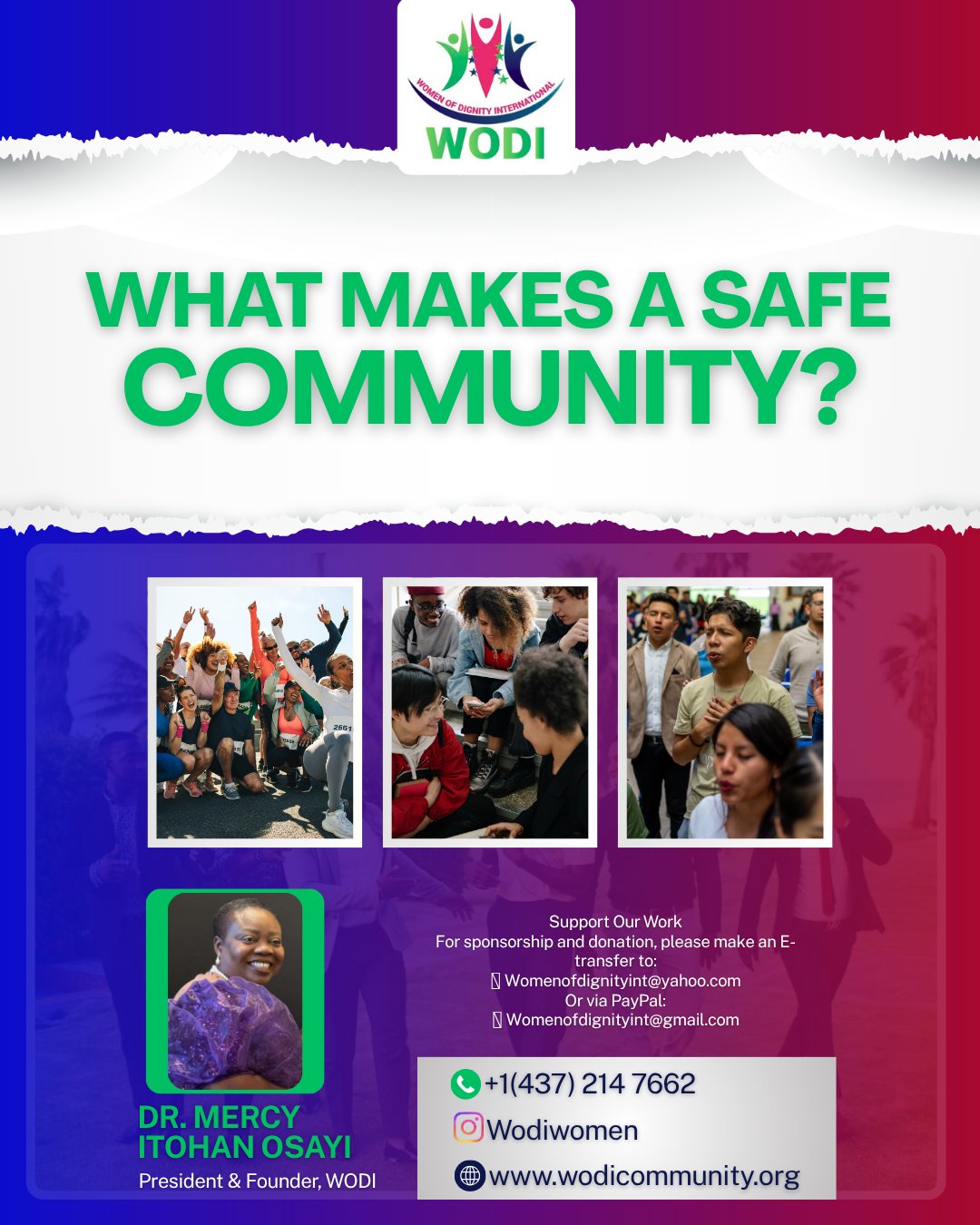
What Makes a Safe Community?
When we think about safety, many of us think of police officers, security systems, or emergency services. While these are essential, a truly safe community is built on much more than laws and enforcement. It is built on people who care about one another.
Safety begins with a shared sense of responsibility. It grows when neighbours know each other, parents watch out for children beyond their own, businesses care about the well-being of their customers, and community members are willing to speak up when something doesn't seem right.
A safe community is not one where crime never happens. It is one where people work together to prevent harm, support one another, and respond quickly when someone is in need.
One of the greatest strengths of any neighbourhood is the willingness of its residents to stay connected. Something as simple as greeting your neighbours, attending community events, or checking on an elderly resident during a heat wave or winter storm can strengthen relationships and build trust. These everyday actions create communities where people feel seen, valued, and protected.
Parents also play a vital role in creating safer communities. Teaching children about kindness, respect, personal safety, and responsibility helps them become thoughtful citizens. Young people who feel supported by their families and communities are more likely to make positive choices and less likely to engage in harmful behaviours.
Technology has also changed the way we think about safety. While it allows us to stay informed and connected, it also requires us to be cautious. Protecting personal information, recognising online scams, reporting cyberbullying, and helping children navigate the digital world safely are now important parts of community safety.
Safety also means creating spaces where everyone feels welcome. A community cannot truly be safe if people experience discrimination, exclusion, or fear because of their age, gender, culture, disability, or background. Inclusion builds trust, and trust strengthens communities.
Another important part of community safety is preparedness. Emergencies such as extreme weather, power outages, or unexpected crises remind us of the importance of having emergency plans, knowing local resources, and supporting vulnerable neighbours. Prepared communities recover faster because they work together instead of facing challenges alone.
We should also remember that emotional safety matters just as much as physical safety. Homes, schools, workplaces, and community centres should be places where people feel respected, heard, and free from intimidation or abuse. A kind word, an open conversation, or simply making someone feel that they belong can create an environment where people thrive.
Every one of us has a role to play. We do not need to wear a uniform to make a difference. We build safer communities every time we choose kindness over indifference, responsibility over apathy, and cooperation over division.
A safe community is not created by a few people doing everything. It is created when everyone does something.
From the WODI Perspective
At Women of Dignity International, we believe that safe communities are built through strong relationships, shared responsibility, and inclusive support. Through our programmes for women, youth, seniors, families, and community outreach, we encourage people to look out for one another, promote respect, and create environments where everyone can live with dignity, confidence, and hope.
Together, we can build communities where every person feels safe, valued, and empowered to thrive.
WODI: Building an inclusive community for Women and Families!