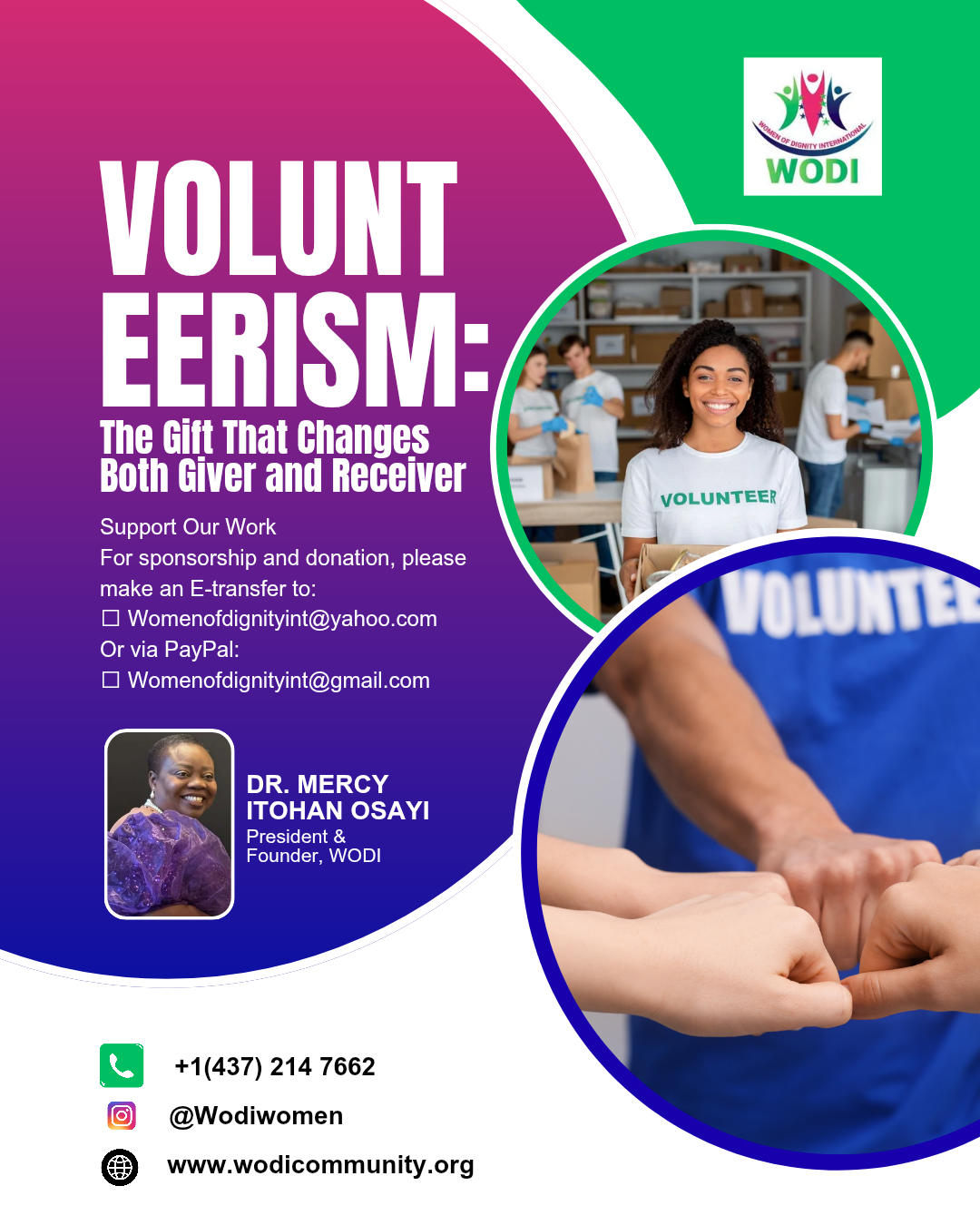
Volunteerism: The Gift That Changes Both Giver and Receiver
Aug 10 2026
Volunteerism: The Gift That Changes Both Giver and Receiver
What if making a difference did not require a large amount of money, a powerful position, or a special title?
What if all it required was your time, your skills, and a willingness to care?
That is the beauty of volunteerism.
Volunteering is often described as giving your time freely to help others, but anyone who has volunteered knows that something else happens along the way. While you may begin with the intention of helping someone else, you often walk away with something too—new friendships, valuable experience, a stronger sense of purpose, and the satisfaction of knowing that your contribution mattered.
Every community has needs that cannot be met by institutions alone. Someone needs to deliver food to a family. A senior may need companionship. A young person may need a mentor. A community event may need helping hands. A newcomer may need someone willing to show them where to find support.
These needs may seem small individually, but together they tell us something important: communities work better when people are willing to contribute.
Volunteerism also teaches us that everyone has something valuable to offer. You do not have to be an expert. You may have professional skills, practical knowledge, creative abilities, or simply a caring heart and a willingness to learn.
For young people, volunteering can be particularly meaningful. It provides an opportunity to develop communication, teamwork, leadership, and problem-solving skills while gaining real-life experience. More importantly, it helps young people understand that being part of a community comes with responsibilities as well as benefits.
For seniors, volunteering can provide purpose and meaningful social connection. For working adults, it can offer an opportunity to use their skills beyond the workplace. For newcomers, volunteering can create friendships, build confidence, and provide a sense of belonging.
Volunteerism can also bring people from different backgrounds together. When individuals work side by side toward a common goal, differences become less important than the purpose they share. A community garden, food bank, youth programme, cultural event, or neighbourhood project can become a meeting point where relationships are formed and understanding grows.
Of course, volunteering should not mean exhausting yourself. People have different responsibilities, resources, and limitations. Even a few hours a month can make a difference. Sometimes, volunteering means sharing your professional knowledge. Sometimes, it means making a phone call, preparing a meal, helping at an event, or simply listening to someone who needs company.
The important thing is to start where you are.
We often wait for the "right time" to give back. But there may never be a perfect time. There will always be work, family responsibilities, and other commitments. The question is not whether you have unlimited time. It is whether you can find a meaningful way to contribute within the time you have.
Imagine what our communities would look like if everyone gave something—one hour, one skill, one meal, one conversation, or one helping hand.
The impact would be enormous.
Volunteerism reminds us that community is not something we simply live in. It is something we build.
And every helping hand becomes part of that building.
From the WODI Perspective
At Women of Dignity International, volunteers are an important part of our community work. From supporting our Food Bank and Senior Care initiatives to assisting with youth programmes, CookCraft, community events, outreach, and other WODI initiatives, volunteers help turn ideas into real impact.
We believe there is a place for everyone who wants to contribute. Your time matters. Your skills matter. Your presence matters.
If you have ever wondered whether your contribution is enough, remember this: meaningful change is rarely created by one person doing everything. It is created by many people doing what they can.
WODI: Building an inclusive community for Women and Families!