
The Importance of Healthy Boundaries: Learning When to Say No
Aug 19 2026
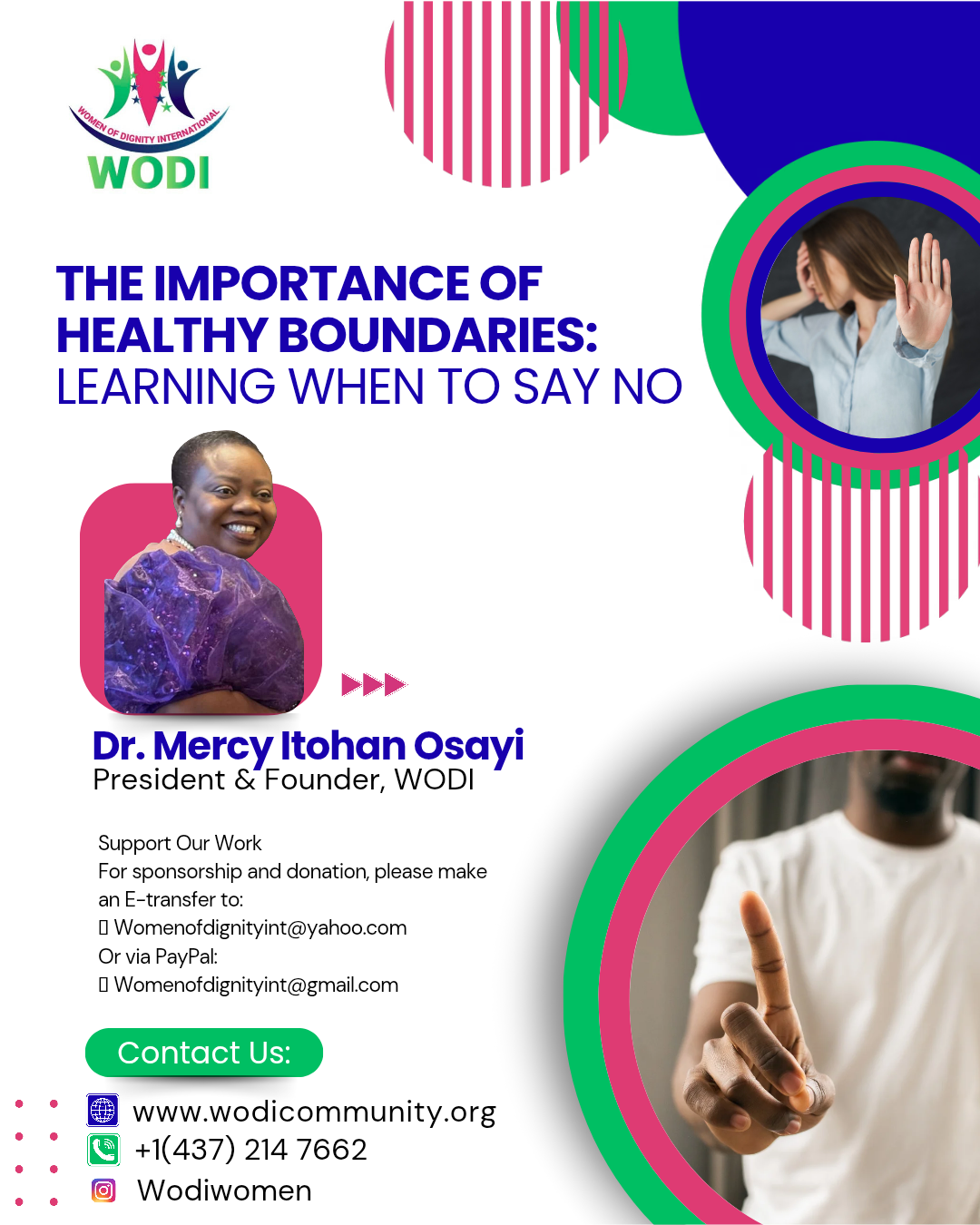
The Importance of Healthy Boundaries: Learning When to Say No
There is a word many people struggle to say.
No.
We say yes when we are exhausted. Yes when we are uncomfortable. Yes when we do not have the time or money. Yes because we are afraid of disappointing someone. Yes because we want to be liked.
Sometimes, saying yes is an act of kindness.
But sometimes, saying yes to everyone means saying no to yourself.
Healthy boundaries are not about being selfish or pushing people away. They are about understanding your limits and communicating them clearly. They help us protect our time, energy, values, relationships, and well-being.
This is especially important for people who are constantly caring for others.
Parents may feel responsible for solving every problem their children face. Caregivers may put their own needs aside for years. Women may feel pressure to be available to family, friends, work, and community at the same time. Young people may agree to things simply because they want to fit in.
But nobody can give endlessly without eventually becoming exhausted.
A healthy boundary might mean saying, "I cannot do that today."
It might mean refusing to lend money when doing so would put your own finances at risk.
It might mean telling someone that you are not comfortable with the way they speak to you.
It might mean switching off your work phone after working hours.
It might mean taking time to rest without feeling guilty.
These are not acts of rejection. They are ways of creating healthier relationships.
Boundaries are also important within families.
Children need to learn that they can say no when something makes them uncomfortable. They should understand personal space, consent, respectful communication, and the importance of speaking to a trusted adult when they feel unsafe.
Parents also need boundaries. Loving your children does not mean allowing disrespectful behaviour or removing every consequence from their lives. Children need structure, responsibility, and clear expectations.
In friendships and relationships, boundaries help prevent resentment. When people constantly do things they do not want to do, frustration eventually builds. Honest communication allows people to understand what is acceptable and what is not.
Of course, setting boundaries can feel uncomfortable at first.
People who have become accustomed to your constant availability may not immediately understand your new limits. Some may even accuse you of changing or becoming selfish.
That does not automatically mean your boundary is wrong.
Learning to say no respectfully is an important life skill.
You do not need to give a long explanation every time. Sometimes, "I am not able to do that" is enough.
At the same time, boundaries should go both ways. We should expect others to respect our limits while also respecting theirs. Healthy relationships are built on mutual understanding, not control.
The goal is not to build walls around yourself.
It is to build doors that you can open and close wisely.
As we move through our busy lives, let us remember that we are allowed to rest. We are allowed to change our minds. We are allowed to protect our peace. We are allowed to ask for help.
And yes, we are allowed to say no.
Because sometimes the healthiest relationship you can build begins with learning to respect your own limits.
From the WODI Perspective
At Women of Dignity International, we believe empowerment includes knowing your worth, understanding your limits, and having the confidence to make healthy choices. Through our programmes and community engagement, we encourage women, young people, and families to build relationships rooted in respect, dignity, communication, and mutual support.
Let us teach our children to respect boundaries, practise them in our own lives, and create communities where saying "no" does not require fear, guilt, or shame.
WODI: Building an inclusive community for Women and Families!