
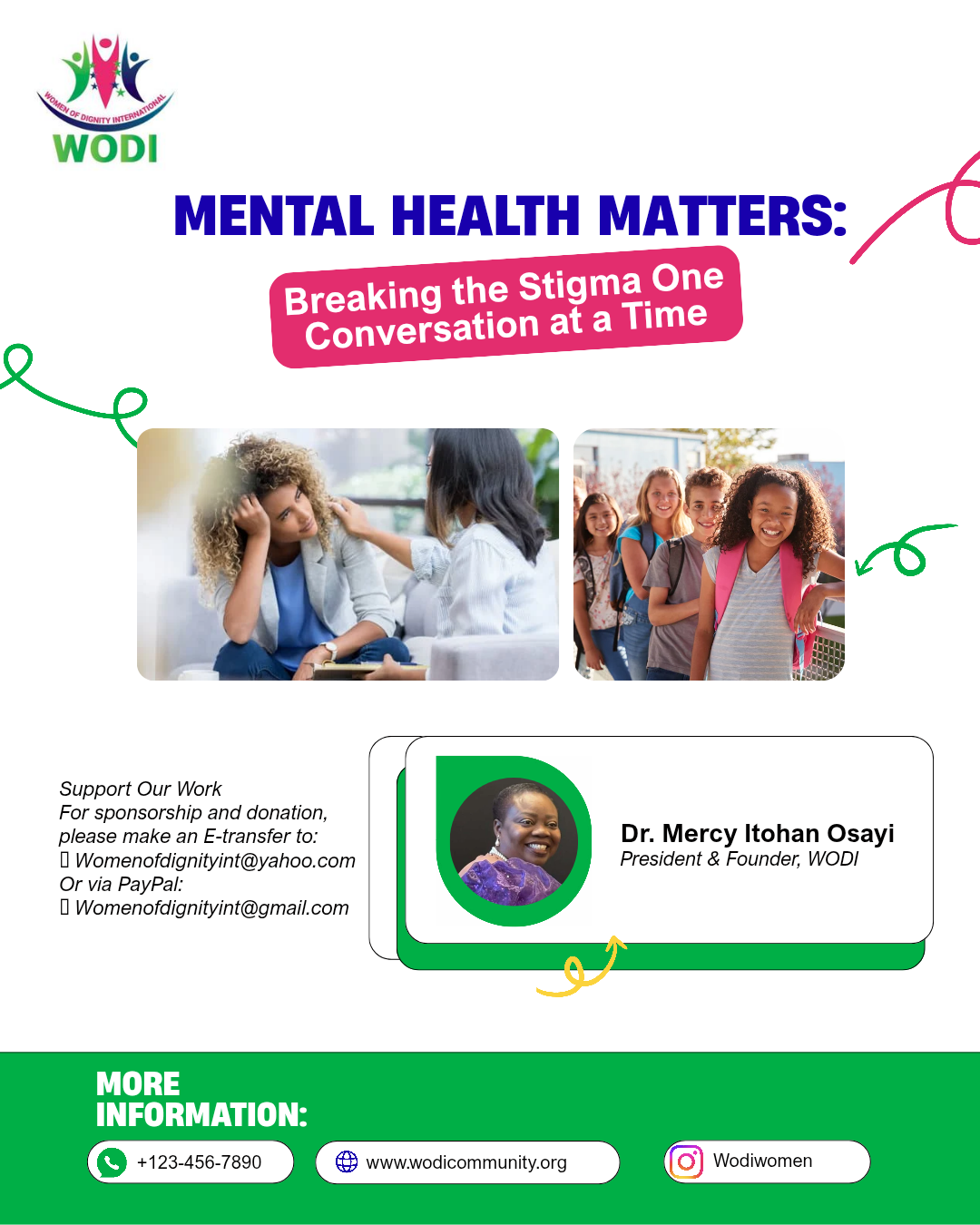
Mental Health Matters: Breaking the Stigma One Conversation at a Time
Jul 20 2026
Mental Health Matters: Breaking the Stigma One Conversation at a Time
Not every wound can be seen.
A person may walk into a room with a smile, greet everyone warmly, and carry on with their daily responsibilities, while quietly battling anxiety, depression, stress, grief, or emotional exhaustion. Mental health challenges do not always have visible signs, which is why they are often misunderstood or ignored.
For generations, many people were taught to keep their struggles to themselves. Expressions like "be strong," "don't cry," or "you'll get over it" became common responses to emotional pain. While often well-intentioned, these words have discouraged countless individuals from speaking up or seeking the support they need.
The truth is that mental health is just as important as physical health.
Just as we would not ignore a broken bone or persistent illness, we should not ignore prolonged emotional distress. Our minds and bodies are deeply connected. When our mental well-being is affected, it can influence our sleep, relationships, work, decision-making, and overall quality of life.
Life presents challenges that can test even the strongest among us. The loss of a loved one, financial hardship, caregiving responsibilities, workplace stress, family conflict, loneliness, or major life changes can all take a toll on emotional well-being. Experiencing these struggles does not mean someone is weak—it means they are human.
One of the greatest barriers to healing is stigma. Many people fear being judged, misunderstood, or labelled if they admit they are struggling. As a result, they suffer in silence, believing they must face their challenges alone.
This is where families and communities can make a lasting difference.
Creating safe spaces for honest conversations allows people to express their feelings without fear of criticism. Sometimes, healing begins with a simple question asked with genuine care: "How are you really doing?" Just as important is taking the time to listen without rushing to offer solutions or dismiss someone's experience.
Parents also play an important role in shaping how children understand emotions. Teaching children that it is okay to talk about their feelings, ask for help, and support others builds emotional resilience that can last a lifetime. Schools, workplaces, faith communities, and community organizations all have a responsibility to promote environments where mental well-being is valued and protected.
Taking care of our mental health also means making time for healthy habits. Getting enough rest, staying physically active, maintaining meaningful relationships, limiting excessive screen time, spending time in nature, and seeking professional support when needed are all positive steps toward emotional wellness.
Perhaps the greatest act of kindness we can offer someone is to remind them that they are not alone. A conversation, a visit, an encouraging message, or simply being present can make a world of difference to someone who feels overwhelmed.
When we replace judgment with compassion and silence with understanding, we create communities where people feel safe to ask for help and hopeful enough to heal.
Because true strength is not found in pretending everything is fine. It is found in having the courage to speak, to listen, and to support one another through life's challenges.
From the WODI Perspective
At Women of Dignity International, we believe that healthy communities begin with healthy people—physically, emotionally, and mentally. Through our programmes, support networks, and community engagement, we encourage open conversations, meaningful connections, and environments where every individual feels valued, respected, and supported. Together, we can help break the stigma surrounding mental health and remind one another that no one has to walk alone.
WODI: Building an inclusive community for Women and Families!