
Building Resilient Communities in Uncertain Times
Jul 27 2026
Building Resilient Communities in Uncertain Times
The world is changing faster than ever before. Rising living costs, extreme weather events, health concerns, technological advancements, and global conflicts continue to shape the way we live. While we cannot predict every challenge that lies ahead, we can decide how prepared we are to face them together.
Resilience is often described as the ability to recover from difficult situations. But for a community, resilience means much more than simply bouncing back after a crisis. It means being connected, prepared, compassionate, and willing to support one another before, during, and after difficult times.
The strongest communities are not those that never face problems. They are the ones that refuse to let challenges divide them.
The past few years have taught us valuable lessons. We have seen neighbours helping neighbours during emergencies. Volunteers have delivered food to families in need. Community organisations have provided support to seniors, newcomers, and vulnerable individuals. Ordinary people have shown extraordinary kindness when it mattered most.
These acts remind us that resilience is built long before disaster strikes.
Every family can contribute to a stronger community. Knowing your neighbours, checking on older adults during extreme weather, preparing a basic emergency plan, supporting local businesses, volunteering, and participating in community programmes all help create a network of people who can depend on one another when challenges arise.
Resilience also begins with raising resilient children. Young people should be encouraged to solve problems, adapt to change, manage disappointment, and understand that setbacks are a natural part of life. Rather than protecting them from every difficulty, we can equip them with the confidence and skills to overcome life's obstacles.
Communication is another important part of community resilience. During times of uncertainty, accurate information, honest conversations, and mutual trust help prevent fear and misinformation from spreading. Communities thrive when people work together instead of allowing differences to create division.
Climate change has also highlighted the importance of preparedness. Heat waves, flooding, storms, and other extreme weather events are becoming more frequent in many parts of Canada and around the world. Preparing our homes, protecting vulnerable neighbours, conserving resources, and caring for our environment are no longer optional—they are essential steps towards building safer communities.
Perhaps the greatest source of resilience is hope. Hope inspires people to keep moving forward even when circumstances are difficult. It encourages innovation, strengthens relationships, and reminds us that every challenge also presents an opportunity to grow stronger together.
None of us can build resilient communities alone. It takes families who care, volunteers who serve, organisations that support, and leaders who place people at the centre of every decision.
When we invest in one another, we create communities that are not only able to withstand challenges but also emerge stronger because of them.
The future will always bring uncertainty, but together, we can build communities where compassion is stronger than fear, unity is greater than division, and hope continues to light the way forward.
From the WODI Perspective
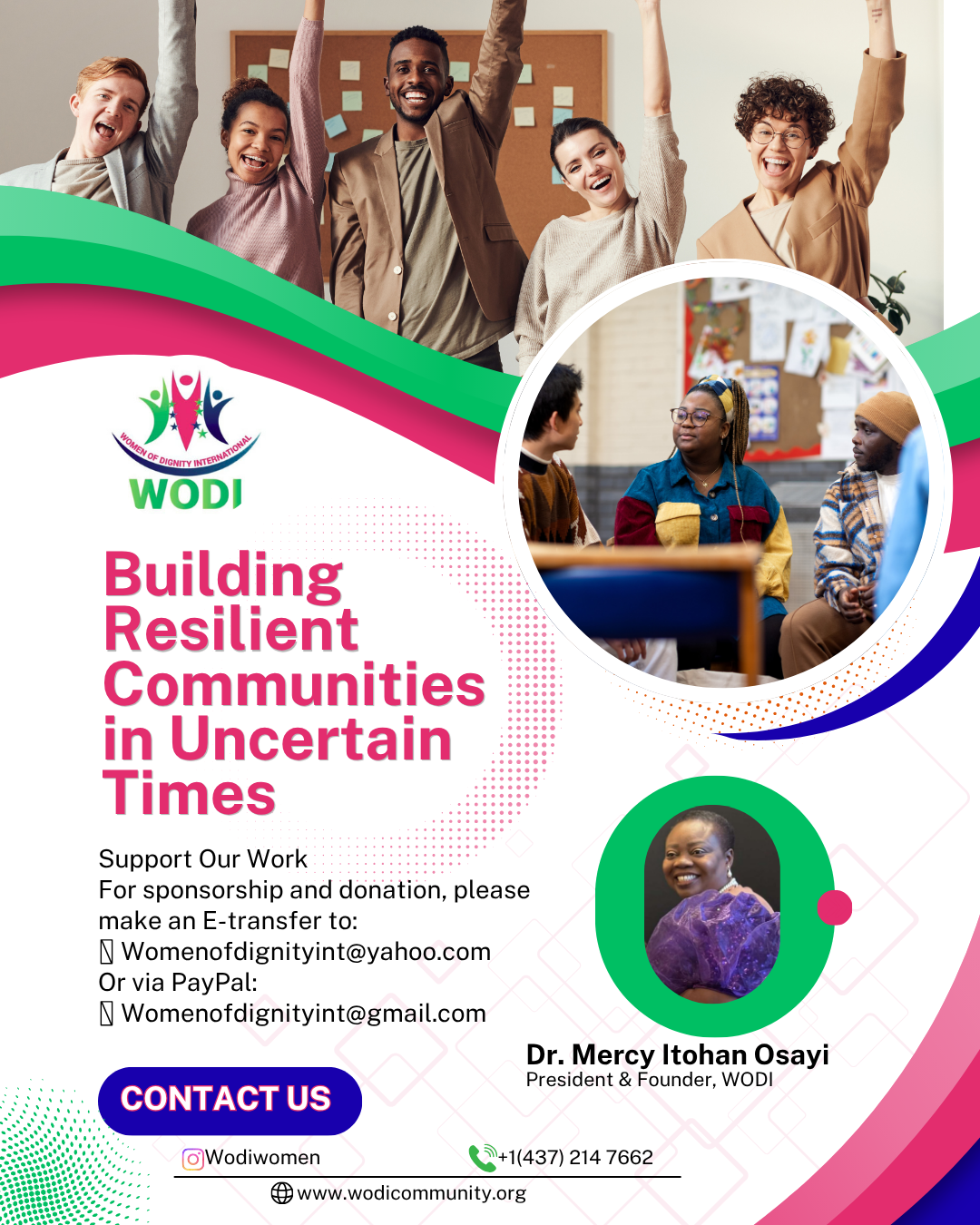
At Women of Dignity International, resilience is at the heart of everything we do. Through our programmes supporting women, youth, seniors, families, food security, health awareness, climate action, and community engagement, we are helping to build stronger, more connected communities. We believe that when people support one another, every challenge becomes an opportunity to grow, serve, and create lasting change.
WODI: Building an inclusive community for Women and Families!