
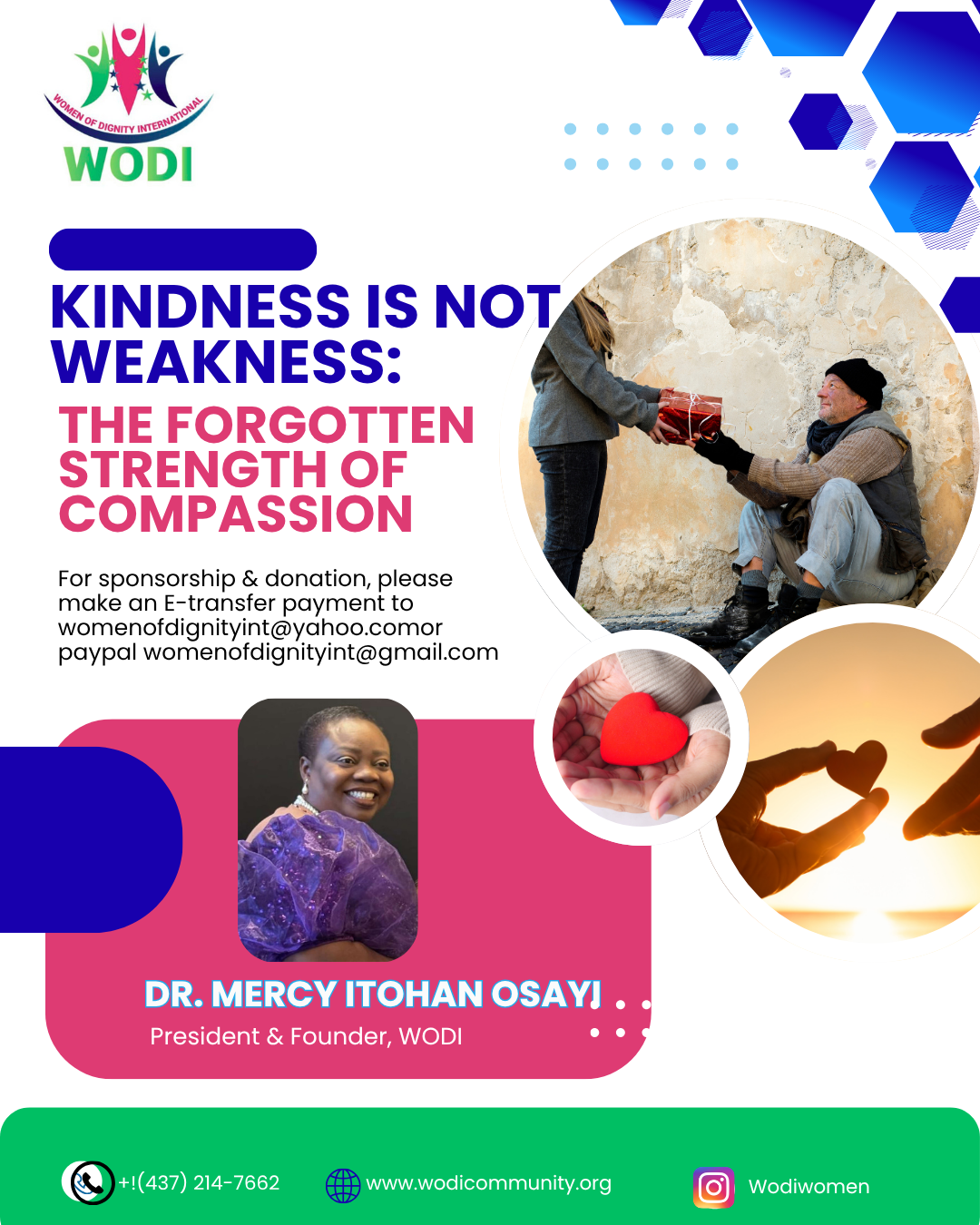
Kindness Is Not Weakness: The Forgotten Strength of Compassion
Jun 27 2026
Kindness Is Not Weakness: The Forgotten Strength of Compassion
In a world that often celebrates competition, speed, and personal achievement, kindness can sometimes be mistaken for weakness. People who are compassionate are occasionally seen as too soft, too forgiving, or too willing to put others first. Yet history and everyday life tell a different story. Kindness is not a sign of weakness—it is one of the greatest strengths a person can possess.
Being kind requires courage. It takes strength to remain calm when others are angry, to forgive when you have been hurt, to help without expecting recognition, and to choose understanding over judgment. These are not the actions of someone who is weak. They are the choices of someone whose character is grounded in empathy and respect for others.
Compassion has the power to transform lives in ways we may never fully see. A word of encouragement can restore someone's confidence. A listening ear can ease another person's burden. A small act of generosity can give hope to someone who feels forgotten. Often, we underestimate the impact of simple acts of kindness because we never witness the ripple effects they create.
Our communities are stronger when kindness becomes a shared value. Neighbours who care for one another create safer environments. Schools that encourage empathy raise children who value inclusion over division. Workplaces built on respect inspire greater collaboration and trust. Families that practice patience and understanding become places where every member feels loved and supported.
Kindness also plays an important role in leadership. True leaders do not lead through fear or intimidation. They lead by serving others, listening with humility, and making decisions that uplift those around them. Compassionate leadership builds loyalty, strengthens relationships, and creates lasting positive change.
Unfortunately, the pressures of daily life can sometimes make people less patient and more self-focused. Financial stress, demanding schedules, personal struggles, and social divisions may cause us to overlook the needs of those around us. Yet these are precisely the moments when kindness is needed most. A simple smile, a thoughtful message, or an offer to help can remind someone that they are not alone.
Children learn kindness by observing adults. When parents, teachers, and community leaders demonstrate respect, generosity, and empathy, young people are more likely to adopt those same values. In this way, compassion becomes a legacy passed from one generation to the next.
Kindness does not mean accepting injustice or remaining silent in the face of wrongdoing. Rather, it means responding with humanity, even when addressing difficult situations. It means standing up for others while treating every person with dignity and respect.
Imagine what our communities would look like if kindness became our first response instead of our last resort. Imagine workplaces where encouragement replaced unnecessary criticism, families where forgiveness overcame resentment, and neighbourhoods where people genuinely looked out for one another. These are not impossible ideals. They begin with ordinary people making intentional choices every day.
In the end, the measure of our lives is not found only in our achievements or possessions, but in how we treat the people whose paths we cross. Long after titles are forgotten and successes fade, kindness remains a lasting legacy that continues to touch lives.
Choose kindness. Offer compassion. Be the reason someone believes that goodness still exists in the world.
WODI: Building an inclusive community for Women and Families!