
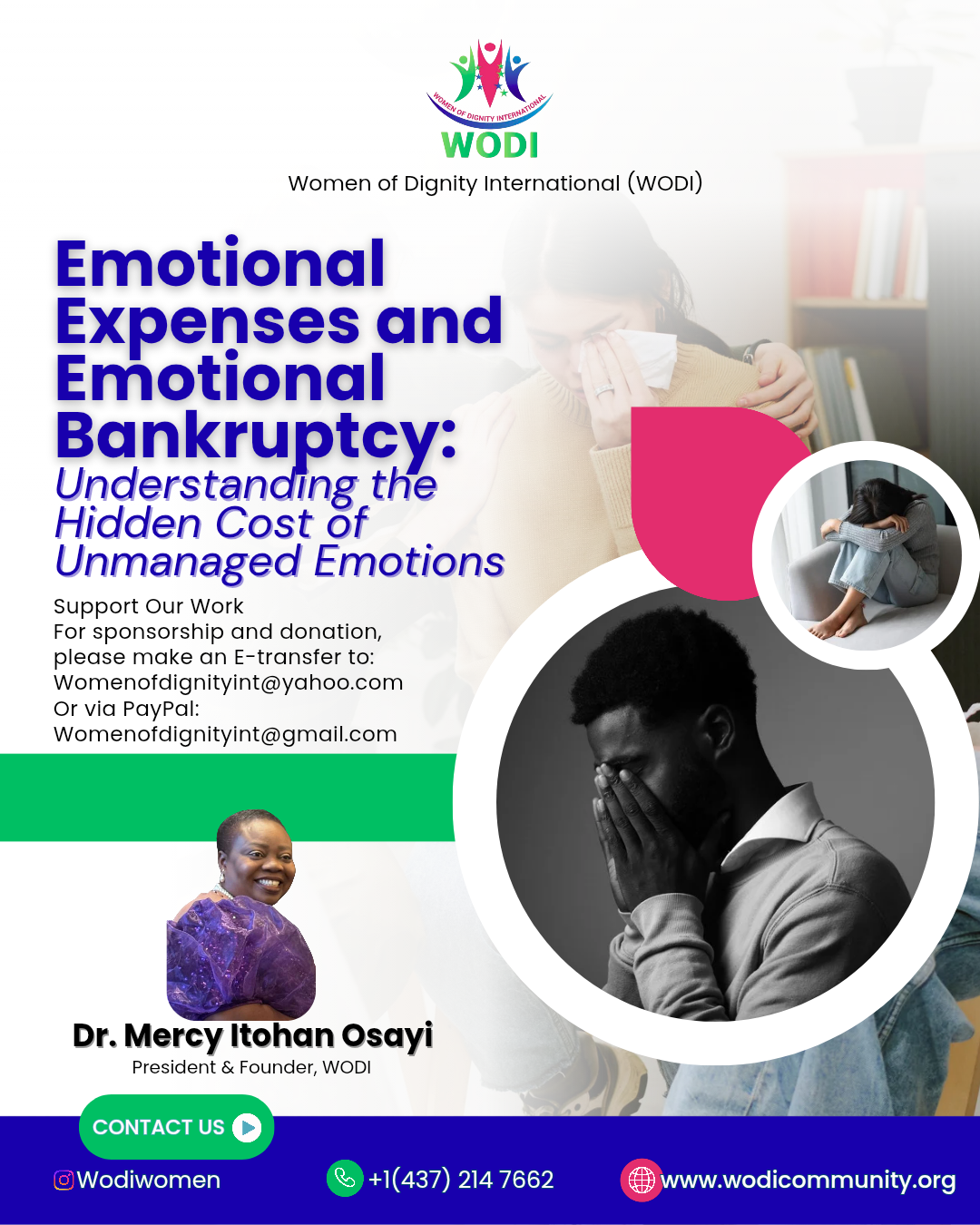
Emotional Expenses and Emotional Bankruptcy: Understanding the Hidden Cost of Unmanaged Emotions
Feb 04 2026
Emotional Expenses and Emotional Bankruptcy: Understanding the Hidden Cost of Unmanaged Emotions
Just as finances require budgeting and accountability, emotions also demand careful management. When emotional energy is spent without awareness or replenishment, individuals can experience what may be described as emotional expenses and, over time, emotional bankruptcy.
Understanding these concepts helps people protect their mental well-being, improve relationships, and live with greater balance and dignity.
What Are Emotional Expenses?
Emotional expenses are the emotional costs we pay in daily life—stress from unresolved conflict, pressure from unmet expectations, emotional labour without support, and constant self-sacrifice without rest.
Common emotional expenses include:
Taking responsibility for everyone else’s feelings
Staying in draining relationships or environments
Suppressing emotions to avoid conflict
Overcommitting without boundaries
While some emotional effort is unavoidable, unchecked emotional spending can quickly become exhausting.
What Is Emotional Bankruptcy?
Emotional bankruptcy occurs when emotional expenses consistently exceed emotional income. It is a state of emotional depletion where individuals feel numb, overwhelmed, irritable, or disconnected.
Signs of emotional bankruptcy may include:
* Chronic fatigue and emotional exhaustion
* Loss of motivation or joy
* Increased frustration or withdrawal
* Difficulty setting boundaries
Without intervention, emotional bankruptcy can affect mental health, productivity, and relationships.
How Emotional Bankruptcy Develops
Emotional bankruptcy often develops gradually. People may continue giving, supporting, and enduring without rest, reflection, or support. Over time, emotional reserves are depleted.
This pattern is common among caregivers, leaders, parents, and individuals who feel responsible for others’ well-being.
Rebuilding Emotional Balance
Preventing emotional bankruptcy requires intentional emotional budgeting—knowing when to give, when to pause, and when to receive support.
Healthy practices include:
* Setting clear emotional boundaries
* Allowing space for rest and reflection
* Expressing emotions honestly and respectfully
* Seeking support when needed
Engaging in activities that restore emotional energy
Emotional income—joy, rest, connection, and self-care—must be prioritised alongside responsibility.
Why Emotional Awareness Matters
Managing emotional expenses is not a sign of weakness; it is a sign of self-awareness and maturity. Emotionally balanced individuals are better able to support others without losing themselves.
At Women of Dignity International (WODI), we encourage emotional awareness as a foundation for healthy leadership, relationships, and personal growth.
A Thought to Reflect On
Ask yourself:
* Where am I emotionally overspending?
* What drains me without replenishing me?
* How can I protect my emotional well-being?
When emotional expenses are managed wisely, emotional strength is sustained.